

What Dental Materials Can Be Refined?
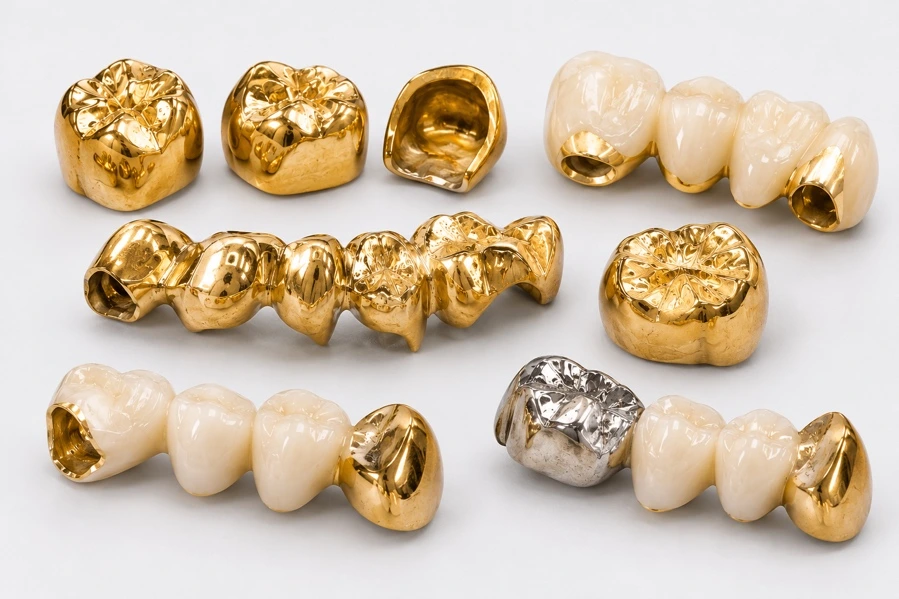
Many dental materials contain recoverable precious metals and can be sent for dental scrap refining. You may even hear dental gold being referred to as “yellow” or “white” – this pertains to the alloy composition of the material itself. If you’re unsure whether a material qualifies, our team can review it and help determine the best refining option.
Dental Gold Crowns
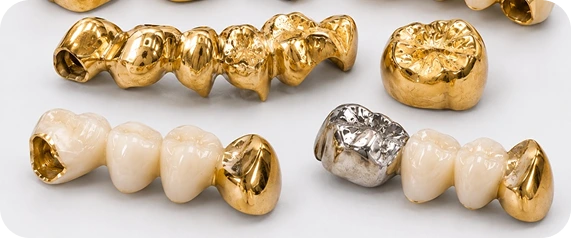
Gold crowns are one of the most common forms of dental scrap. Depending on composition, crowns may contain recoverable gold and other precious metals like silver, platinum, and palladium. We accept whole or broken crowns, including extracted restorations.
Dental Bridges
Dental bridges often contain valuable precious-metal alloys that can be processed through refining to recover their metal content. We accept both partial and complete bridge restorations containing eligible precious metals.
Inlays and Onlays
Gold inlays and onlays removed during dental procedures may contain precious metals suitable for refining and recovery. These materials can be included with other eligible dental scrap shipments.
Dental Alloys
Dental alloys may contain varying amounts of gold, silver, platinum, and palladium. Both legacy and modern dental alloys can be evaluated and refined based on their precious metal content.
Yellow vs White Dental Gold
There is a clear distinction between “white” and “yellow” dental material, depending on the alloys that were used to create the crown/dental appliance. The material composition of a dental prosthetic will naturally impact the final value and how it’s processed at a refinery. Since yellow dental and white dental have different material makeups, they may be separated and processed separately at any refinery.

Yellow Dental Gold
Predominantly made of gold - alloyed with silver, platinum, and palladium.

White Dental Gold
Predominantly made of palladium - alloyed with platinum, gold, and silver.
If you are looking to recycle any post-cremation dental gold, contact our Cremation Recycling division for more information – All crematory related business inquiries are handled separately by the Cremation Recycling team.
Completed Projects
Satisfied Clients
Years in Refining
How Dental Gold Refining Works
Receiving and Logging
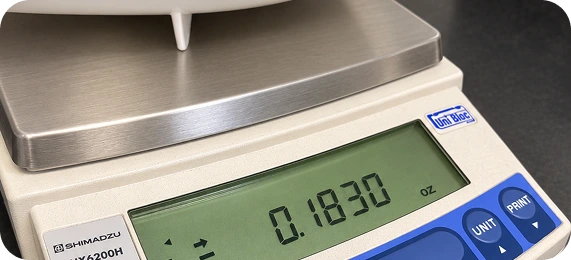
Your material arrives at our Des Plaines processing facility or our Jewelers Row office in downtown Chicago. It is inspected, weighed, photographed, and logged with its own refining lot number. Two people witness and verify every weight.
Melting and Sampling
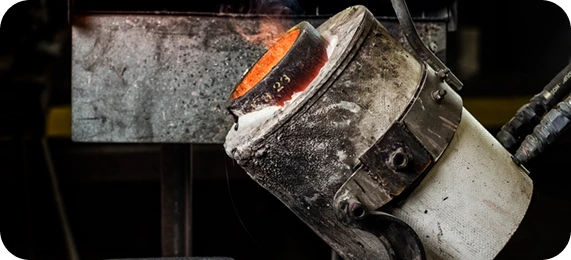
The lot is melted in our electric induction furnaces and sampled while it is liquid and uniform. The bar is poured, cleaned, re-weighed, and marked with your unique lot number. The sample goes to our laboratory, and the bar stays secured in our vault.

Fire Assay
Our chemists take an initial XRF reading to get an early analysis of the metal content, then we run a full fire assay. The purity % from the fire assay is calculated into the material weight to find the total ounces yielded, which then determines your final payout. Learn about the difference between XRF and Fire Assay, and why fire assay is still the most accurate method for purity analysis.
Settlement and Payment
Receiving, processing, and laboratory data are compiled into your settlement report. Payment is calculated at the market price on the day of settlement, or at a price you locked earlier. You can be paid by check, wire, ACH, or take part of your settlement back as fine metal.
Why Mid-States?
40+ Years in Precious Metals Refining
Mid-States Recycling & Refining has been refining precious metals since 1982. Our roots go back even further through Simmons Refining Company, giving customers decades of refining experience behind every lot. Our head chemist alone brings more than 40 years of refining expertise and holds a master’s degree in chemical engineering. On top of our experience, many members of our refining and laboratory team have spent majority of their careers at Mid-States, helping maintain consistency throughout the processing and payout of your lot.
Open-Door Policy & Transparent Payouts
There are tons of smoke and mirrors in the precious metals industry, especially when it comes to processing dental gold. Mid-States aims to bridge the gap and truly show customers what their metal is worth. That’s why we open our doors to our customers and welcome them to visit our facility. We invite you to observe the refining process firsthand, from receiving and weighing to melting, sampling, and laboratory analysis.
In the end, it’s our goal to make you feel comfortable about the process and understand the real value of your dental scrap. When you work with us, you’ll know what your material was made of, how many ounces were yielded from it, and the exact dollar amount from each metal (gold, silver, platinum, palladium, etc.). That type of transparency you won’t find elsewhere.
Refining Solutions for Dental Professionals
Dental practices, laboratories, dental groups, and suppliers all have different refining requirements. We help each manage eligible materials through the same documented refining process.
| Facility Type | Eligible Material | Benefit |
|---|---|---|
| Dental Practices | Accumulated scrap, including extracted crowns, bridges, and old restorations | Helps manage and refine stored dental scrap materials |
| Dental Laboratories | Production scrap, including sprues, bench filings, and polishing sweeps | Supports the recovery and refining of production-generated scrap |
| Dental Groups | Materials collected from multiple locations | Simplifies material tracking and reporting across offices |
| Commercial Dental-Scrap Suppliers | Recurring dental gold shipments and refining volumes | Provides flexible settlement options and support for recurring refining activities |
Frequently Asked Questions
- What types of dental scrap do you accept?
We accept dental crowns, bridges, inlays, onlays, and dental alloys, along with laboratory scrap such as casting sprues, bench filings, and polishing sweeps. If you are unsure whether a material qualifies for dental scrap refining, contact our team before shipping.
- How do you determine the value of my dental gold?
We melt your lot, take a sample, and fire assay it in our own lab. Your payment is based on the metal content found, the market price at settlement (or your locked price) and the applicable refining charges.
- How long does the refining and settlement process take?
Settlement times typically fall between 2-4 weeks for complete processing and payment. Express terms are available for smaller lots. Refer to our dental refining schedule or speak with your sales representative about expected turnaround times for dental scrap refining.
- Can I monitor the refining process in person?
Yes. Mid-States has an open-door policy, so you or your representative can observe the weigh-in, documentation, melting, and testing of your lot. Representatives who witness processing can also take home samples from each melt for independent assay verification.
- How do I ship my dental scrap to Mid-States?
Sort your material, seal it in clearly marked bags, and include a packing list showing the contents and weights. We can arrange insured courier pickup, or you can deliver the material in person during our business hours.
- What forms can my refined metal be returned in?
You can take all or part of your settlement as fine metal, including gold, silver, platinum, or palladium in the form of bullion bars, coins, or grain. Settlement can also be paid by check, wire transfer, or ACH.
- Do you offer pickup service?
Yes. We can arrange insured courier pickup directly from your office. Packages are typically delivered to our facility on the following business day. Shipping charges are applied to your final settlement, so there is no extra step for you.
Ready to Refine Your Dental Gold?
Get a refining quote for your dental scrap. Our team will review your materials and outline the next steps.
Speak with our refining team